



Anonymity is a chain, not a switch
The question is almost always framed as a decision: show your face or not. Becoming an OnlyFans creator lists it as one of the four decisions before signing up. This article goes further, because the face is the most overrated part of the answer.
You are as anonymous as your weakest link. An account without a single face picture helps little if the chat mentions where you live, the username also appears on an old private profile, and the street outside the window is visible in the background of a video. People are rarely identified through one picture, they are identified through the sum.
So it pays to think in four layers rather than one question: what is visible, what you say, which accounts and names you use, and who around you knows. Any of those layers can undo the others.
What actually identifies you in pictures
Working without a face is possible and costs reach, that is the known part. The unknown part is that the details are more dangerous than the face, because nobody thinks about them while shooting.
- The room. A recognisable room stays the same for years. Anyone who has visited you privately recognises it instantly, and that is the most common route by which somebody from your own circle finds out.
- The view outside. A window with a view, a balcony, a street in the background. That is the single most conclusive piece of information a picture can contain.
- Permanent features. Tattoos, distinctive birthmarks, scars, always the same jewellery. They replace a face when somebody is looking deliberately.
- Reflections. Windows, screens, glasses, shiny surfaces, the classic place where a face or a room becomes visible after all.
- Sound in videos. Other people's voices, a place name in the background, recognisable noises. Almost always forgotten when checking, because people look at the image.
And the files themselves. Recordings can carry additional information, including about where they were taken. Large platforms usually strip such data on upload, but do not rely on it, particularly for material you pass on directly.
The practical consequence is simple and still rarely applied: one fixed, neutral place to shoot, which you check once rather than checking every picture individually.
Deleting does not help here: the moment something has been online, copies exist that you have no access to. That direction is therefore final, the other one stays open indefinitely. Showing more is always possible later, showing less never is.
The chat is the bigger leak
This is where, in practice, what rarely happens in pictures does happen, precisely because it does not feel like disclosure.
A fan asks perfectly ordinary things over weeks. What the weather is like where you are. Whether you have work tomorrow. What your dog is called. Which series you are watching. Each individual answer is harmless, the sum is a description of a person, region, occupation, daily routine, surroundings. Answering warmly and truthfully gives away more over months than any picture.
The solution is neither lying case by case nor staying silent, because both destroy the chat. What works is a pre-defined framing biography: a rough region instead of the city, a field of work instead of the employer, a daily routine that is plausible and not yours. Written down once, used consistently.
There is a second reason that weighs more than it first sounds: as soon as more than one person is writing, that biography has to exist anyway. Without it, two chatters tell the same fan two different stories, which gets noticed and, worse, prompts an attentive fan to start probing. How agencies solve that internally is covered in OnlyFans chatter management.
Accounts, names and the rest of the technical side
The third layer is the dullest and the one where mistakes are hardest to repair, because they are usually made on day one.
Usernames are the most common leak. A name you once used privately is findable via search engines and old profiles. New work means a new name that never existed anywhere before, and one that is not built from parts of your real name either.
Its own email address, linked to nothing private, used for registering everywhere in this context. Do not reuse the address that also handles invoices and private accounts.
The payout name is not the stage name. For payouts you need your real details and have to verify with an identity document, that is a condition, not a choice. The platform knows those details, your fans do not. What matters here: check what fans actually see on payments and tips, and make sure the stage name appears there.
Finally, the mistake that undoes the whole separation: do not link the accounts to each other. A private profile following the work page, or a phone number registered in both contexts, renders all three previous points useless.
What you cannot control
Honesty means saying where these measures end. Knowing that beforehand means making an informed decision rather than a reassured one.
Screenshots and copies. Anything somebody can see, somebody can save and pass on. No technical setting changes that. It is the real reason why the decision about what gets created at all matters more than any setting afterwards.
Region blocking helps, within limits. Access from particular regions can be restricted. That reduces the chance of somebody nearby stumbling across you by accident, and for exactly that it is useful. It does not prevent access by other routes, and it has no retroactive effect on what has already circulated.
Other people. Whoever knows can tell. That layer has no technical fix, and in practice it is the most common route by which something reaches your own circle. The only effective measure is keeping the circle small.
So the realistic expectation is not "nobody will ever find out" but: an accidental discovery becomes very unlikely, a deliberate search stays possible. For the vast majority of situations, that is exactly the difference that matters.
Where an agency makes the difference
Laying the four layers side by side, one thing stands out: pictures and accounts are one-time decisions you make yourself and then simply keep to. The chat is the only layer where something new can happen every day, and simultaneously the one that costs the most time.
That is exactly the part an agency takes over. One that works cleanly asks you for a framing biography and a list of what is never said, and holds to both across every shift. One that starts without any specification invents something itself instead, and then you no longer know what your account says about you. How to tell the difference is covered in OnlyFans management.
If you are at that point, you can get in touch with us. We know a number of vetted agencies and which of them genuinely handle specifications on persona and limits properly, precisely the criterion this article is about. If none currently fits, we say so.
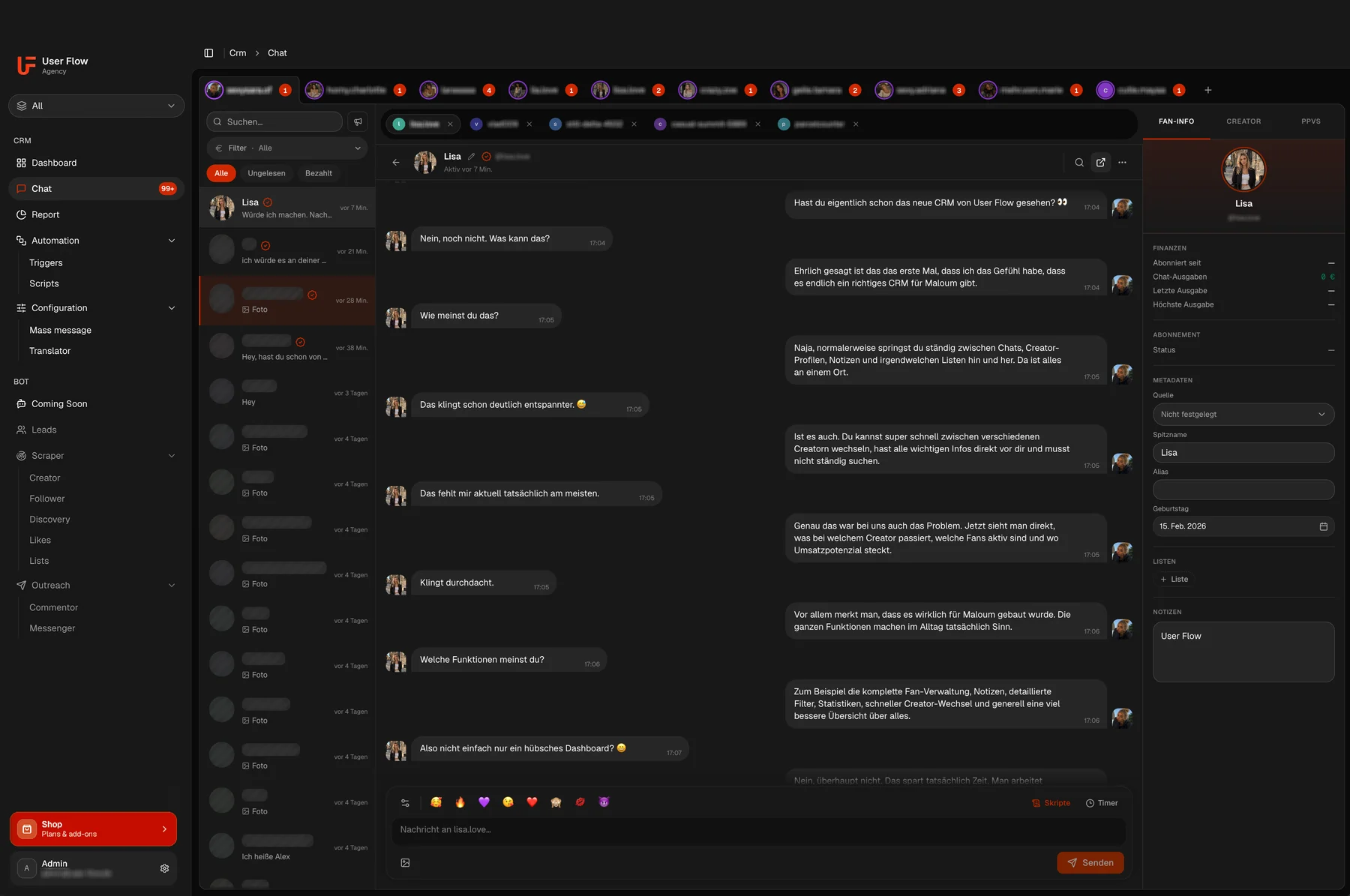
The chat is the layer that takes daily work.
Send us a short message on Telegram telling us where you stand. We will say honestly whether an agency would help you right now, and introduce you to ones that actually respect specifications on persona and limits. Free and without obligation.
Frequently asked questions
Can a creator really stay anonymous?
Largely, if all four layers hold: what is visible, what you say, which accounts and names you use, and who around you knows. You are as anonymous as your weakest link, people are rarely identified through one picture but through the sum. The realistic expectation: an accidental discovery becomes very unlikely, a deliberate search stays possible.
What gives more away in pictures than a face?
Recognisable rooms, the view out of a window, tattoos and distinctive birthmarks, always the same jewellery, reflections in windows or screens, and in videos the sound, other people's voices, place names, characteristic noises. Files can also carry extra information about where they were taken; large platforms usually strip it on upload, but do not rely on that.
How do I handle the chat without seeming rude?
Neither lying case by case nor staying silent, both destroy the conversation. What works is a pre-defined framing biography: a rough region instead of the city, a field of work instead of the employer, a plausible daily routine that is not yours. Written down once, used consistently. As soon as several people are writing, it is mandatory anyway.
What should I watch out for with accounts and names?
A username you have never used privately and that is not built from your real name, old profiles are findable via search engines. Its own email address with no private link. And no connection between the accounts: a private profile following the work page, or a phone number in both contexts, undoes the separation.
Do fans see my real name on payouts?
For payouts you need your real details and verification with an identity document, the platform knows those, your fans do not. It is still worth checking what fans actually see on payments and tips, and making sure the stage name appears there.
Is region blocking worth it?
Yes, within limits. It reduces the chance of somebody nearby stumbling across you by accident, and for exactly that it is useful. It does not prevent access by other routes and has no retroactive effect on what has already circulated. Screenshots cannot be prevented technically anyway, which is why the decision about what gets created at all matters more than any setting afterwards.