




Posting on 4Based is acquisition, not upkeep
On platforms whose traffic arrives from elsewhere, the profile feed plays a modest role. People came in through Instagram, Reddit or a funnel, they already know why they're there, and the feed merely confirms that decision. It's a shop window for an audience that's already at the door.
Automatic posting by folder and interval is built into the 4Based CRM.
On 4Based the order is reversed. The users are on the platform anyway, and you get found where they move around: through Discovery and ForYou. What feeds those surfaces is activity. A profile that publishes something can surface. A profile that hasn't published in eight days cannot.
That changes what a posting gap actually costs. It isn't about looking reliable to existing fans, it's about contacts that simply never happened during that window. You never see that number, because nobody writes in to report that they didn't find you.
Where discovery happens on the platform itself, the feed isn't a showcase, it's a channel. Going quiet doesn't cost it goodwill, it costs it volume.
Why this channel counted as unpredictable
Anyone working systematically on 4Based uses both routes to new users: visibility through posts, and targeted outreach. Both work, but until now they had very different characters.
Outreach translated into a machine early on. Finding profiles, filtering them, writing to them, those are steps with clear rules, and that's exactly where the bot comes in. How that part is built is covered in 4Based Bot: predictable traffic without team effort.
Publishing, on the other hand, stayed manual. And manual work has one property no strategy can account for: it follows whoever is doing it. What emerges is a pattern every agency recognises, one week with six posts, then ten silent days, then another burst because somebody noticed nothing had gone out in a while.
When the channel gets judged on that basis, the verdict is nearly always the same: "organic doesn't do much for us." But what was measured wasn't the channel, it was a random pattern. With discovery-driven reach, consistency isn't a virtue, it's the precondition for anything becoming measurable at all.
For most agencies, the gap between "organic doesn't work" and "organic works" isn't better content. It's a cadence that never breaks.
The configuration in four fields
The automation is deliberately narrow. Four entries and it runs:
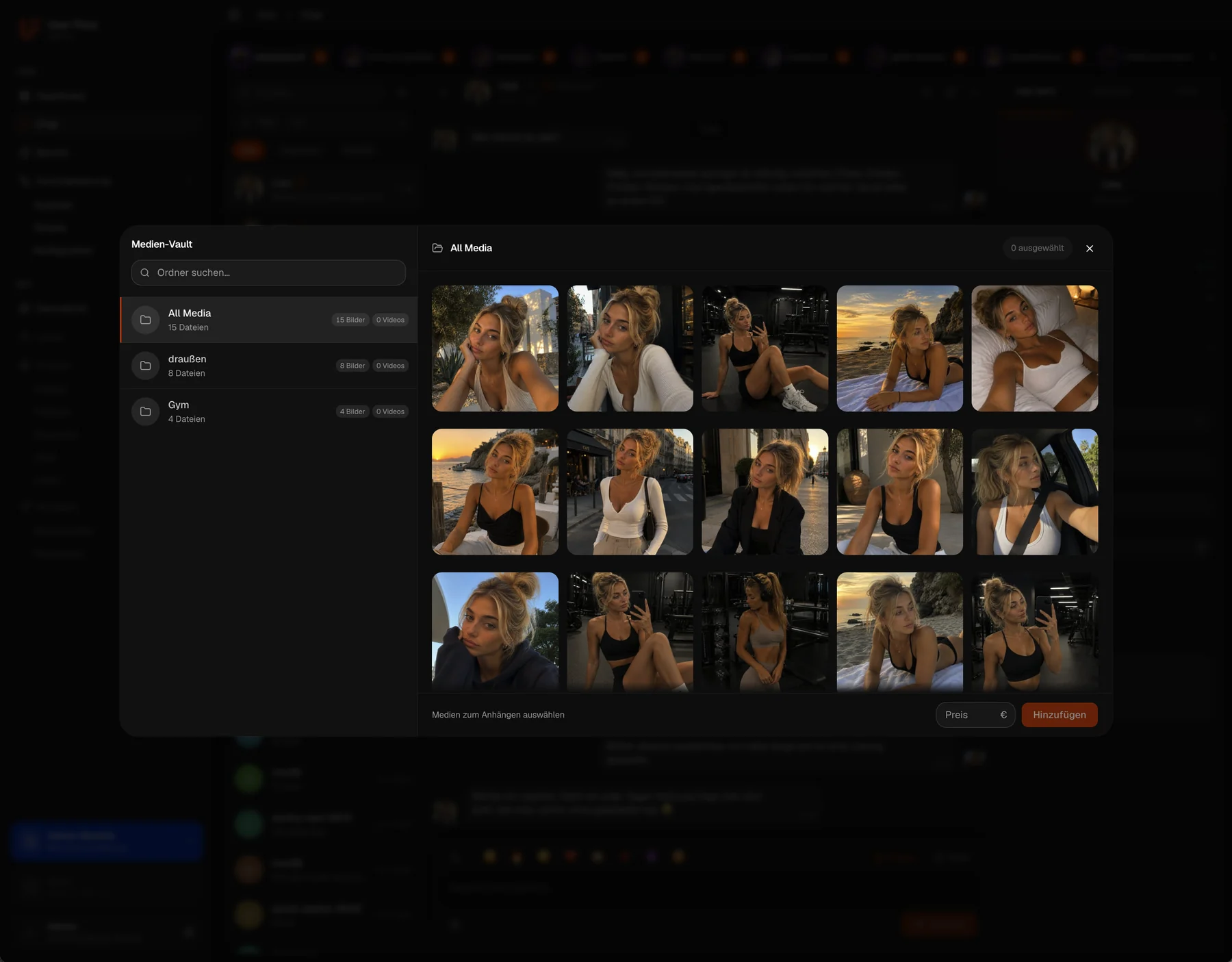
- Folder, the source. Each automation draws from exactly one vault folder, and that folder doubles as your queue. Whatever sits there goes out in the order it sits in.
- Post every, the cadence. The options are 6 hours, 12 hours, 1 day, 2 days and 3 days; Custom sets a different value. It means an interval, not a clock time: each post follows the previous one at the chosen rhythm.
- Post the first one immediately, the start condition. When active, it publishes on save instead of waiting out the first interval. During setup that's the fastest way to confirm everything is working.
- Default values, caption, tags and visibility. They apply to everything from this folder until you set them differently on an individual post. Caption and tags are required, and up to three tags are possible per post.
Those three tags are the most interesting constraint. On a platform where discovery runs internally, tags aren't a filing system for you, they're a search criterion for everyone else. Three slots force a decision about what your profile should be found for, and because they apply per folder, how you cut your folders is your tag strategy.
The stock calculation that has to add up first
The cadence is quick to pick, which is exactly why it usually gets picked too ambitiously. A rhythm is only as good as the stock carrying it. What a folder needs to hold for 30 days of runway:
- 6 hours, four posts a day, around 28 a week, roughly 120 files a month. Only sensible with a large archive.
- 12 hours, two a day, 14 a week, around 60 a month. The aggressive value for a build-up phase.
- 1 day, seven a week, around 30 a month. The starting value for most accounts.
- 2 days, three to four a week, around 15 a month. For creators with irregular production.
- 3 days, two to three a week, around 10 a month. The floor at which consistency still registers.
The practical route runs backwards: look at how much material actually gets produced in a month and take the line that matches. A six-hour cadence with a half-empty folder produces precisely the pattern you set out to fix, except this time nobody notices when it started.
Topping up. Book a recurring slot where you check the stock against the cadence. A folder running dry doesn't announce itself, it just stops.
Both routes to new users, both predictable.
Outreach through the bot, visibility through a cadence that doesn't break, and the numbers for both in the CRM.
Two stages, two folders
Because visibility belongs to the default values, it's decided per automation, and therefore per folder. That sounds like a setting, but it's the point where two automations turn into a funnel.
The stage set to Everyone is the side of your profile that works outward. It feeds Discovery and ForYou, it's the reason anyone shows up in the first place, and it can comfortably carry the tighter cadence. The Subscribers stage runs behind it and answers the question that comes up right after signing up: do I get something here regularly, or was that a one-off? It can run less often, but it can't go missing.
In practice that means two folders, two automations, different cadences. Anyone who throws both into one folder and corrects the visibility on individual posts afterwards has quietly turned the automation back into manual work.
When Maloum and 4Based run side by side
Each automation is tied to exactly one folder, so you create one per account regardless. It's worth following that technical split on the content side rather than working around it: the audience is different, the tags people search for are different, and the cadence an account can sustain is rarely the same. Running both platforms in lockstep with identical posts saves you half an hour of setup and costs you the one piece of information that actually matters when running both, which platform responds to what. What carries across platforms and what doesn't is covered in 4Based system: porting it over & running both.
The numbers land in the CRM afterwards: which account gets how many new chats, which direction they came from, and what becomes of them. Without that read-out, every cadence decision stays a hunch, with it, it becomes a setting you can justify. How the structure behind that works is covered in 4Based CRM: scaling on Germany's platform.
Frequently asked questions
How does automatic posting work on 4Based?
You assign a vault folder as the source and a cadence to publish at. Whatever sits in that folder goes out in order, using the default caption, tags and visibility you define once. Your only ongoing job is topping the folder up.
Does regular posting on 4Based actually bring new users?
Yes, because discovery on 4Based happens on the platform itself. Profiles get found through Discovery and ForYou, and what surfaces there is activity. Unlike platforms whose traffic arrives from outside, the feed works on reach directly instead of merely confirming it.
How many posts do I need in the folder?
That follows from the cadence. For 30 days of runway you need roughly 30 files at a daily cadence, around 60 at 12 hours and about 120 at 6 hours. At 2 to 3 days, 10 to 15 will do. Pick the cadence your production can carry, not the one you'd like to run.
Can I post separately for subscribers and for everyone?
Yes. Visibility is part of an automation's default values, so you create two: one set to Everyone as the public side of your profile, one set to Subscribers for everything behind the subscription. Each draws from its own folder and can run at its own cadence.
Can I feed Maloum and 4Based from the same folder?
Technically each automation is tied to exactly one folder, so you create one per account anyway. That separation is also right on the content side: the audience differs, the tags people search for differ, and the workable cadence is rarely the same. Identical posts in lockstep remove your ability to tell what works where. The Maloum side is covered in Maloum auto-posting.